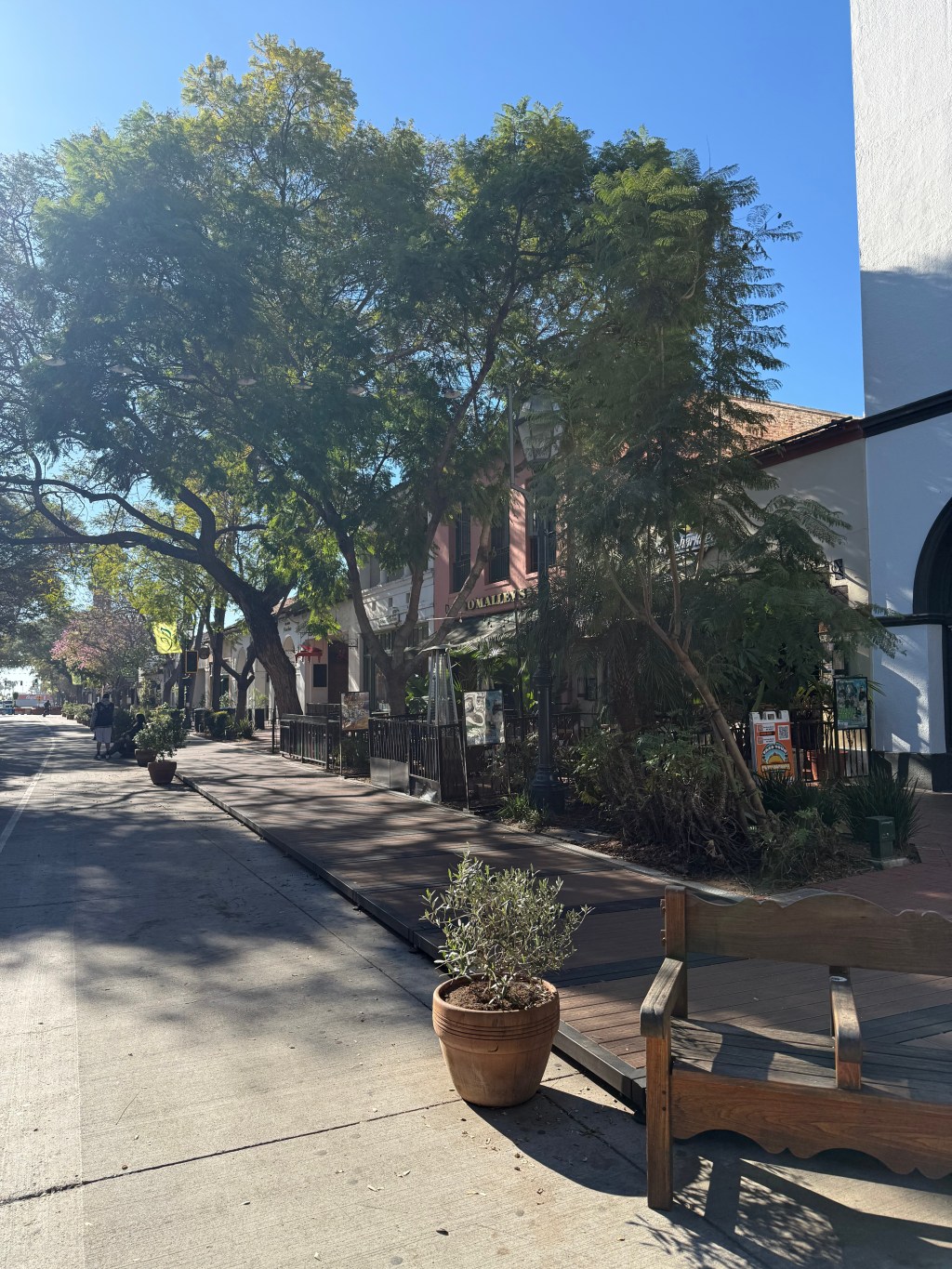
A Street With Many Visions
State Street has long been the hub of Santa Barbara’s downtown. With millions of visitors every year, the summer time brings a certain hustle and bustle all business owners and residents can appreciate. However, everyone has their own opinion on what the future of State Street should hold. Over the past decade, different advocacy groups, associations, and councils have disputed over what State Street should look like and feel like. With the Covid 19 pandemic and ensuing aftermath, State Street was officially shut down in the main downtown sections to cars and turned into a pedestrian promenade, which many locals love.
Our mayors office, and select members of city council, are strongly advocating for the reopening of State Street to cars. This has also gained the support of the Downtown Santa Barbara Business Improvement Association, who in turn formed a petition to reopen the street. Said petition was crushed by a counter petition formed by Strong Towns Santa Barbara, an advocacy association focused on improving downtown, improving transportation, and advocating for lower housing costs. With the publics clear support of a closed State Street, why is our identity such a struggle?
The Cost of a Missing Plan
Some of the struggle may stem from a lack of coordination on State Street, as well as failure to act on a master plan. Over $800,000 has been spent in the past few years on the master plan, and yet our city has once again fired our planner, brought in a new team leaving us back at the beginning with no results. With so many groups disagreeing, and compromises being made, it is no wonder there is a lack of a uniformed image. The 400 block of State Street, which has never been closed to car and is just short of the promenade, sees continuous business turnover and struggles financially. The next blocks up are some of the most successful blocks on State Street, particularly the 500 block.
On the other end of our promenade, we have the 1200 block, which sees constant business turnover and economic struggles, though it has a major theater on the block. This block has a confusing identity compared to others, as it is only partially on our State Street promenade. Half of the block is broken into a 2 lane bike path, while the other half is open to cars. Last year, the 1200 block lost one of it’s largest retail anchors, Starbucks and is yet to fill the space. Many long established restaurants flourish on this block, however, the further up the block you go from the fully closed off sections of State the more turnover we see.
Small Changes Making a Big Difference
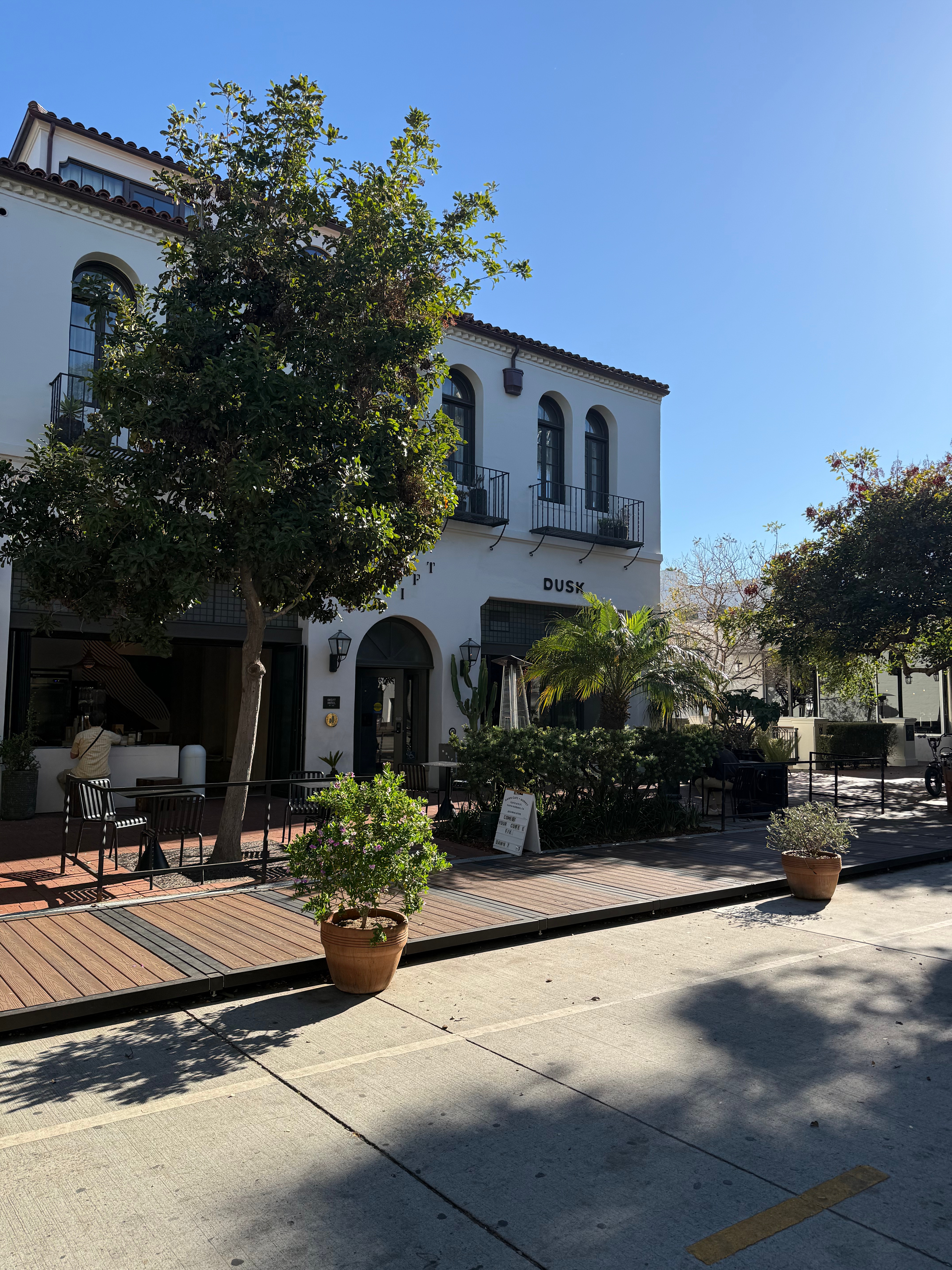
What is it that sets the 500 and block apart? This block has long since been a lively hub in the heart of downtown, packed with restaurants, bars, and people. However, a shift in the landscape seems to be playing a pivotal role as well. In September of 2025, the city implemented a new temporary walkway, allowing restaurants to have their patios directly in front of their businesses rather than on the other side of a busy sidewalk in what were formerly our parklets.
We were given the opportunity to speak with a bar manager located on the 500 block named Jamie Magee. We asked him for is overall opinion on the change of traffic pattern, and the usage of temporary furnishings to accomplish it.
“If the city actually built it up to code initially, rather than use uneven temporary sidewalks, monitored so that kids didn’t bike or skate on it, and didn’t make it the businesses problem to maintain, it would’ve been a nice addition to the block.” Magee stated, “Instead its a a foot tall, half-baked, uneven curb for drunks to trip on surrounded by vases and benches for homeless to piss on and sleep in.”
Following the sharp criticism of the city’s execution of the project, we wanted to know how it has effected business. We asked the following, “How has the patio space moving directly in front of your space effected business, compared to when it was on the other side of the walk way in a parklet?”
Magee had the following to say, ““I’m actually a fan of that change. Before, no one ever used the extended patio, and it was a hassle having to maneuver through foot traffic while running food and drinks across the sidewalk. Now that it’s pushed closer to the entrance, guests sit on the patio much more often, and we don’t have to worry about people constantly cutting through.”


Leave a comment